
Yin Yoga vs. Restorative Yoga: Which Practice Does Your Body Need?
When I first started teaching yoga, I fell in love with movement.
Vinyasa energized me. Kundalini transformed me. I loved the feeling of flowing from pose to pose, building heat, and finishing class feeling like I had pressed a reset button on both my body and mind.
So when I was asked to substitute a Yin Yoga and Restorative Yoga class at Rancho Santana, I hesitated.
Honestly, I was nervous.
While my background is in Vinyasa and Kundalini, I realized this was an opportunity to deepen my understanding of two practices that are often overlooked—but can be some of the most profound forms of yoga you'll ever experience.
Why Yin Yoga Can Feel Surprisingly Difficult
If you've never tried yin yoga, you might assume it's easy because it involves very little movement.
It's not.
In a typical yin yoga class, you'll hold poses anywhere from three to seven minutes. Rather than stretching as deeply as possible, the invitation is to find the space between comfort and pain—then stay there without constantly adjusting or escaping the sensation.
That's often when the mind starts talking.
You'd be surprised what can surface during a long-held pose: impatience, self-criticism, anxiety, old memories, or simply the overwhelming urge to move.
Even experienced yogis experience this.
That's why I begin every class with a grounding meditation that explores the five senses. I remind students throughout the practice to notice their minds wandering—or spiraling. I then encourage them to gently return to what they can see, hear, smell, feel, and taste.
The body is in the pose, but the practice is really about training the mind to stay present.
Restorative Yoga Is an Invitation to Receive
Restorative yoga is challenging in a completely different way.
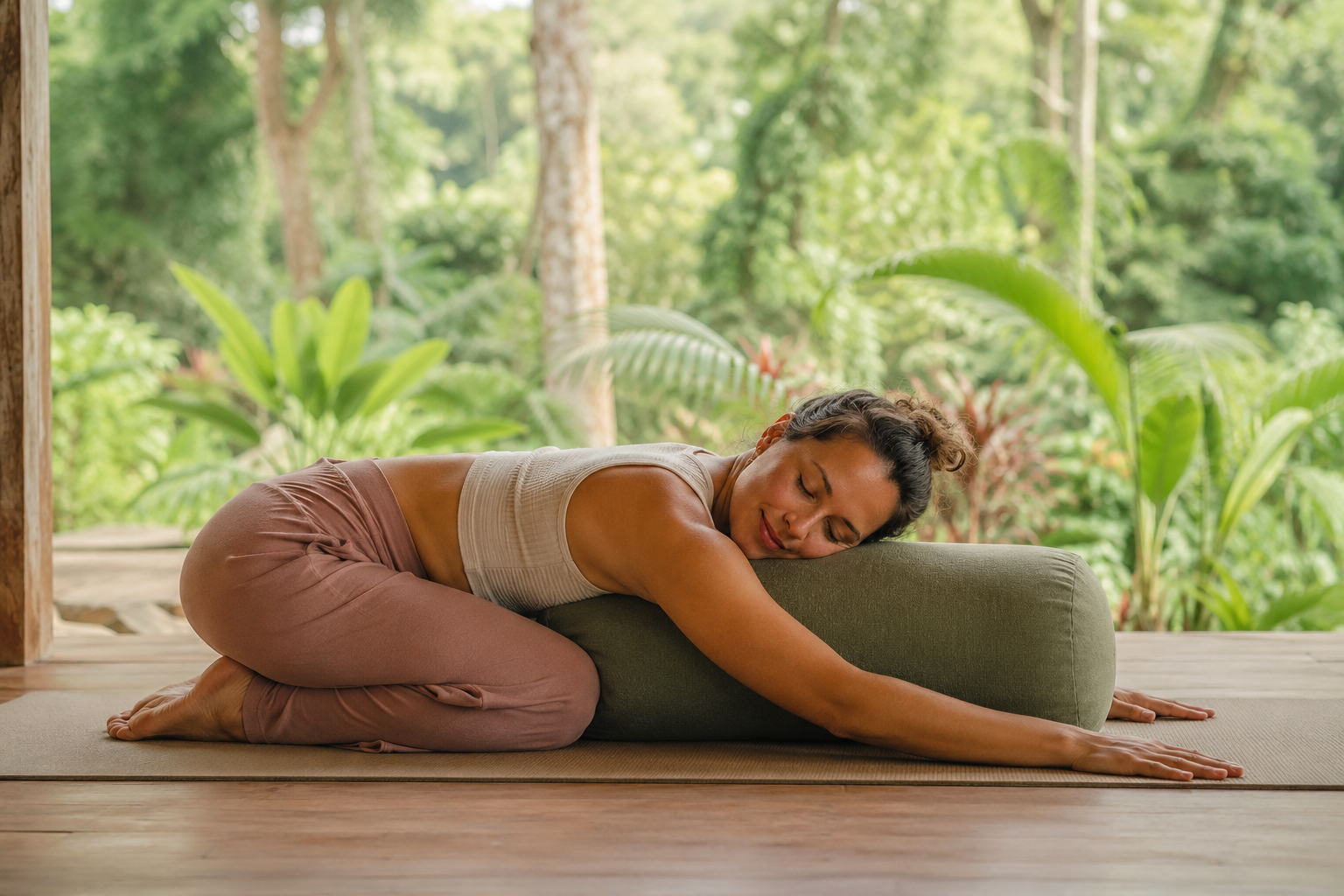
Instead of leaning into discomfort, you're encouraged to make yourself as comfortable as possible.
Blankets.
Bolsters.
Blocks.
Straps.
Use everything.
The goal isn't to stretch farther or build strength. The goal is to allow your nervous system to truly relax.
For many people, that's harder than it sounds.
We live in a culture that celebrates productivity, pushing harder, and believing that "no pain, no gain" is the only path to growth.
Restorative yoga asks a radical question:
What if healing happens when you stop striving?
If you're moving through grief, burnout, anxiety, a breakup, or simply feeling emotionally exhausted, restorative yoga can feel like giving yourself a long, compassionate hug.
Sometimes that's exactly what we need.
The Beautiful Release
After one recent class, a student shared something I'll never forget.
She said she felt like she'd been "wrung out."
I immediately pictured a heavy, soaking wet washcloth being gently twisted until all the stagnant water was released.
Afterward, it becomes lighter.
Cleaner.
Ready to absorb life again.
That's exactly what these slower practices can offer.
Not because they change your circumstances, but because they create space for your body and mind to let go of what they've been carrying.
Experience Yin and Restorative Yoga in Popoyo
If you're visiting Popoyo or Rancho Santana, don't overlook the slower styles of yoga.
Whether you're surfing every day, recovering from travel, working remotely, or simply craving a deeper sense of calm, yin yoga and restorative yoga offer something that faster-paced practices often can't: the chance to pause.
Sometimes the most transformative practice isn't the one that leaves you sweaty.
It's the one that teaches you how to be still.
Looking for yoga in Popoyo? Popoyo Yoga keeps an up-to-date schedule of yoga classes in Popoyo, Guasacate, Rancho Santana, and the surrounding area, making it easy to find the practice that's right for you—whether you're craving an energizing Vinyasa flow or a deeply nourishing restorative class.